About the Journal
Aim and Focus
The International Journal of Animal Biotechnology (IJAB) is a peer-reviewed and refereed international journal that serves as a high-quality scholarly platform for researchers, academicians, industry professionals, and students to publish original, innovative, and current research in the field of animal biotechnology. The primary aim of IJAB is to promote scientific advancement and technological innovation related to animals by encouraging research that integrates biotechnology, life sciences, and applied animal sciences. The journal emphasizes studies that bridge basic research and practical applications, contributing to sustainable animal health, productivity, and welfare at both national and global levels.
Journal Details
Title: International Journal of Animal Biotechnology (IJAB)
ISSN: 2277-4122
Frequency: Yearly
Email: editor.ijab@evegenis.org
Scope of Coverage
IJAB welcomes high-quality original contributions in, but not limited to, the following areas:
■ Animal Biotechnology and Genetic Engineering
■ Animal Genetics, Genomics, and Molecular Biology
■ Reproductive and Developmental Biotechnology
■ Veterinary Biotechnology and Animal Health
■ Vaccine Development, Immunology, and Molecular Diagnostics
■ Livestock, Poultry, and Aquatic Biotechnology
■ Bioinformatics Applications in Animal Sciences
■ Animal Nutrition and Feed Biotechnology
■ Ethics, Biosafety, and Regulatory Aspects of Animal Biotechnology
Types of Articles Accepted
■ Original Research Articles – Full-length papers presenting novel experimental results or significant theoretical contributions
■ Review Articles – Comprehensive and critical reviews of recent developments in animal biotechnology
■ Case Studies – Detailed analyses of real-world applications and field-based innovations
■ Short Communications – Brief reports of significant and timely research findings
Key Commitments
■ Global Reach – Encouraging submissions from researchers across the world
■ Current Relevance – Emphasizing research addressing emerging challenges and innovations in animal biotechnology
■ Quality Assurance – Ensuring academic excellence through a rigorous double-blind peer-review process
Ethics and Publishing Policies
■ Journal Ethics: Adherence to strict ethical standards on plagiarism, authorship, conflicts of interest, and data integrity.
■ Open Access: Immediate, free access to all published content.
■ Repository Policy: Authors may deposit articles in repositories and personal websites.
■ Licensing: Articles are published under CC BY-NC-SA 4.0. Authors retain copyright.
■ Plagiarism Policy: Zero tolerance; all submissions are screened using iThenticate or equivalent tools.
■ AI Policy: Use of AI tools must be transparently disclosed.
■ Digital Archiving: Long-term preservation via services such as Portico or CLOCKSS.
■ Advertising Policy: Only ethical, academic-relevant advertisements are accepted.
■ Ahead of Print: Accepted articles are published online with DOI before issue assignment.
■ Open Access: Immediate, free access to all published content.
■ Repository Policy: Authors may deposit articles in repositories and personal websites.
■ Licensing: Articles are published under CC BY-NC-SA 4.0. Authors retain copyright.
■ Plagiarism Policy: Zero tolerance; all submissions are screened using iThenticate or equivalent tools.
■ AI Policy: Use of AI tools must be transparently disclosed.
■ Digital Archiving: Long-term preservation via services such as Portico or CLOCKSS.
■ Advertising Policy: Only ethical, academic-relevant advertisements are accepted.
■ Ahead of Print: Accepted articles are published online with DOI before issue assignment.
Current Issue
Vol.16 (2026)
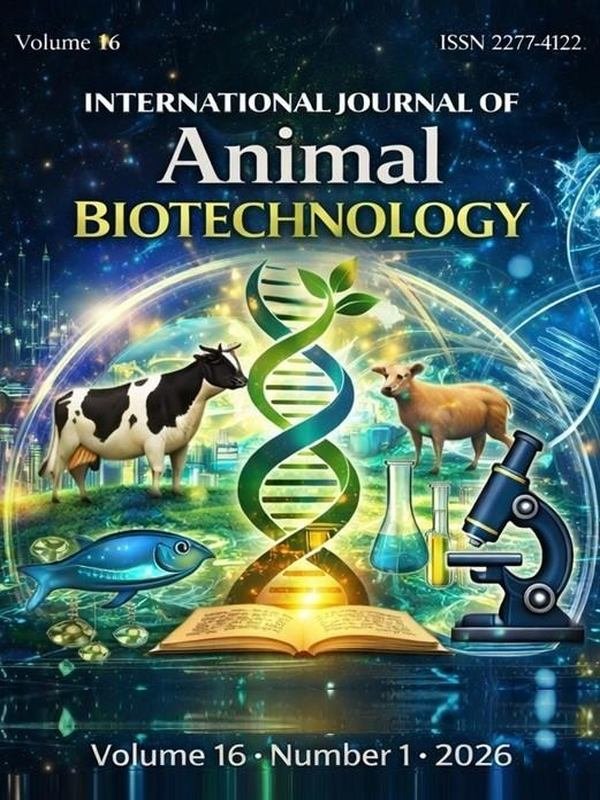
The latest volume showcases a field that has fully embraced systems thinking, recognizing that animal biotechnology must be developed and deployed within complex ecological, social, and economic contexts. This collection features research on the use of gene drives for managing invasive vertebrate pests and disease vectors, acknowledging both the tremendous potential and the significant responsibility associated with such powerful technologies. The journal publishes innovative studies on the biotechnological enhancement of byproduct utilization, creating value from waste streams and contributing to circular economy principles in animal agriculture. Additionally, this volume explores the potential of biotechnology to enhance animal contributions to ecosystem services, from improved manure management to carbon sequestration through grazing management. The work presented here reflects a mature discipline thoughtfully navigating the challenges and opportunities of the Anthropocene.
Published:
28-02-2026